Amillina: A Delicate Script for Creative Projects
There I was, staring at a blank brand board, trying to find the right visual voice for a small, independent skincare line. The client wanted something soft, authentic, and a little bit whimsical. After testing a few options, I settled on Amillina—a delicate, elegant, and flowing handwritten font that felt just right for the brand’s personality.
The Visual Personality of Amillina
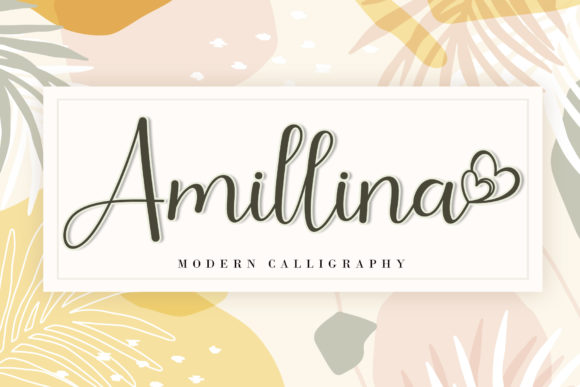
Amillina has a very distinct character. It’s not overly ornate or dramatic, but it carries a sense of grace and fluidity that makes it feel almost like a personal signature. The strokes are well balanced, with subtle swashes and ligatures that give it a natural, handcrafted feel. It’s the kind of font that feels like it was written with care, which makes it perfect for brands that want to convey authenticity and attention to detail.
One thing I noticed early on is how Amillina handles different sizes. On a large logo, it looks refined and sophisticated. But when scaled down, like on a product label or business card, it still holds up surprisingly well. That versatility made it a strong candidate for a variety of design applications.
Testing Amillina in Real Branding Work
I first used Amillina on a logo concept. The client was looking for something that could stand out without being too flashy. Amillina provided that balance—its flow gave it movement, while its structure kept it from feeling too chaotic. When paired with a simple, clean sans serif for the tagline, it created a nice contrast that felt modern yet approachable.
On a packaging mockup, Amillina worked well as a headline font. It added a touch of elegance to the product name without overpowering the rest of the design. I also tried it on a website header, where it caught the eye and set the tone for a more personal, creative brand presence. For social media graphics, it was great for captions and short phrases, giving the content a warm, inviting feel.
When Amillina Shines
Amillina excels in projects that benefit from a human touch. It’s ideal for logos, headlines, and display text where the font can be the focal point. Its flowing nature makes it a good choice for branding that wants to feel artisanal, personal, or emotionally resonant. Whether it's for a boutique identity, a handmade shop, or a creative studio, Amillina adds a layer of sophistication that’s hard to achieve with more rigid typefaces.
It also pairs well with other fonts. I found that pairing it with a serif font like Playfair Display or a modern sans serif like Montserrat created a nice balance. The contrast between the structured serif and the fluid script gave the design depth without feeling cluttered.
Limitations and Considerations
While Amillina is beautiful, it’s not a font for every situation. In long body text, especially at smaller sizes, it can become difficult to read. That means it’s best used as a display or accent font rather than for extended reading. It also doesn’t work well in formal corporate settings where clarity and neutrality are key.
For projects that require high readability, such as instructional materials, legal documents, or anything with a lot of text, Amillina might not be the best choice. It’s important to test it in context before finalizing any design that will be seen by a wide audience.
Practical Tips for Using Amillina
If you're considering using Amillina in your work, start by testing it in a few different scenarios. Try it on a logo, a packaging mockup, and a social media graphic to see how it performs in various formats. Pay attention to how it looks at different sizes and in different color combinations.
Also, check the font’s available styles and alternates. Some script fonts come with multiple versions or variations that can help you fine-tune the look. Amillina includes a range of ligatures and swashes, which can add a unique touch to your designs without making them feel too busy.
Finally, make sure to review the licensing terms before using the font in client work. While Amillina is a premium font, it’s important to understand what you’re allowed to do with it, especially if you’re creating templates, merchandise, or digital products for others.